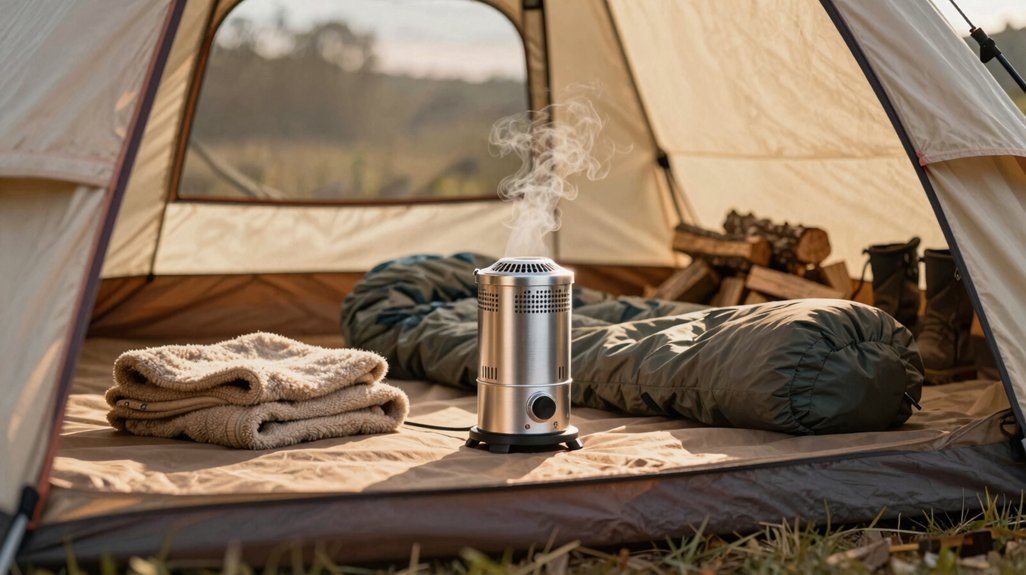
The campfire dies, but your fight against the cold has only begun. You’re about to discover why your sleeping pad does more than your sleeping bag, how tomorrow’s clothes become tonight’s furnace, and the counterintuitive reason you must let freezing air inside.
These aren’t theoretical comforts: I’ve tested them at 12,000 feet with ice in my water bottle by morning. The difference between shivering until dawn and waking rested isn’t expensive gear. It’s knowing which five tactics actually trap heat and which three common mistakes steal it back.
Start With Ground Insulation: Why Your Sleeping Pad Matters Most
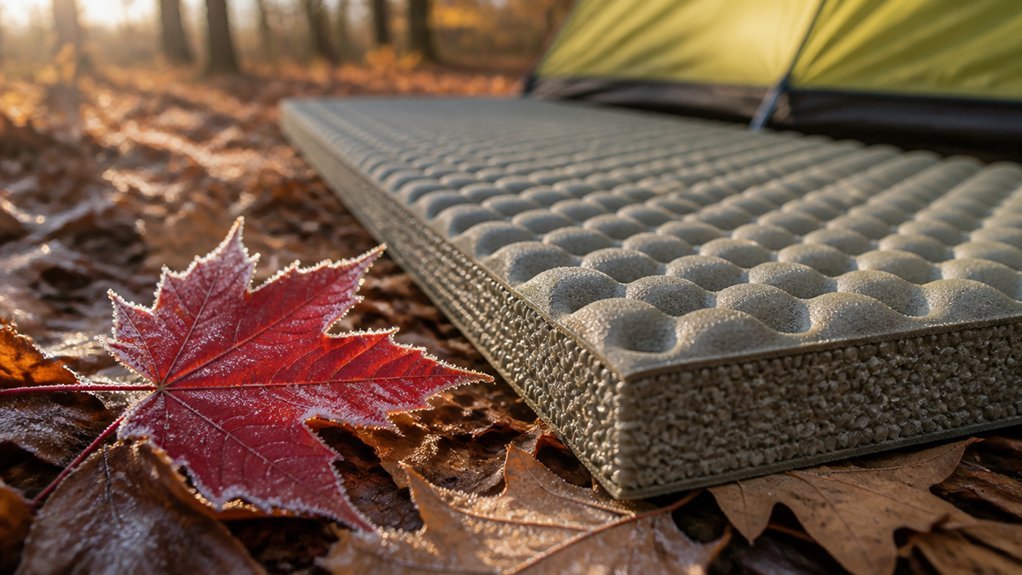
Picture this: you’re zipped into your sleeping bag, fully dressed, hood cinched tight, and you’re still shivering. The culprit isn’t your bag; it’s your sleeping pad. Ground insulation matters more than you’d think. Cold ground sucks heat away faster than air, making heat loss your biggest enemy in tent camping.
Your sleeping pad’s R-value measures its resistance to that heat loss. Higher numbers mean better warmth. For reliable night warmth, you’ll want above 4. The Therm-a-Rest NeoAir Xtherm delivers R-value 7.3 for extreme conditions; the Naturehike Ultralight offers 4.6 for general cold use.
Consider pad layering when temperatures drop. Add a foam pad beneath your main pad to increase your total R-value without buying new gear. You’ll feel the difference immediately.
Recommended Products

Built for All-Season Comfort with 7.2 R-Value: Stay cozy year-round with the SGS-certified Trekology UL R7 camping sleeping pad. Featuring a 7.2 R-value, it provides excellent insulation against ground chill, ensuring comfortable sleep in various climates and conditions.
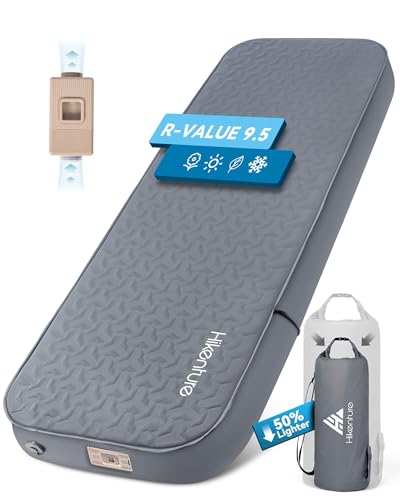
HANDS-FREE! INFLATE FASTER THAN YOUR COFFEE BREWS - Ditch manual pumps forever! The built-in electric pump inflates your foam sleeping pad to luxury hotel firmness in 90 seconds flat (faster than boiling water!). Collapsing is smarter too - just push a button and watch the camping mattress pad self-suck into a compact bundle. It's never been easier to set up camp and catch some Z's!
Build a Sleep System That Traps Heat Inside Your Tent
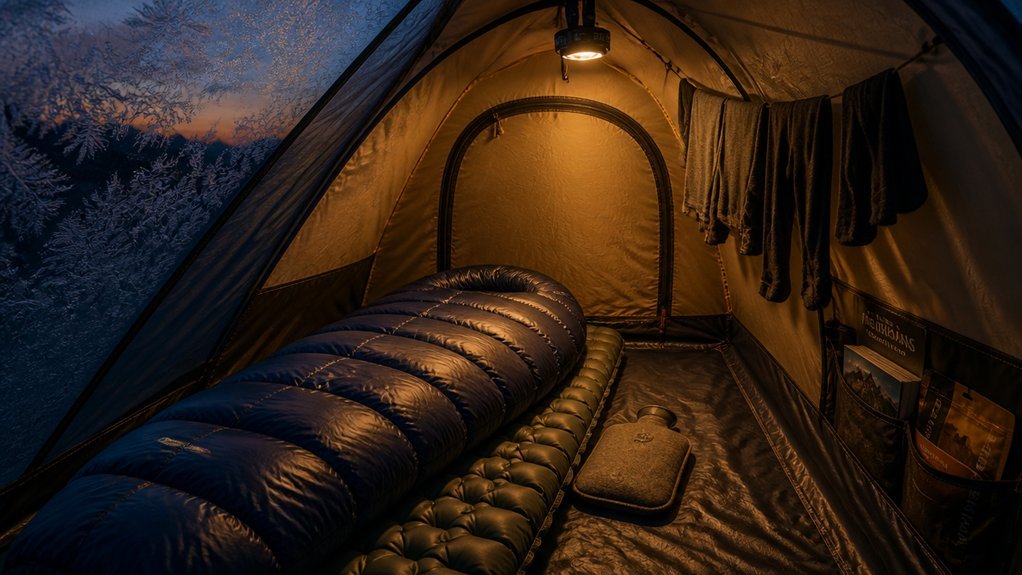
Because you’re already thinking about your sleeping pad, let’s talk about how to build the rest of your sleep system so you’re not just insulated from below but wrapped in warmth on all sides. Pair your sleeping pad R-value with a hooded sleeping bag featuring draft tubes and collar adjustments; these seal gaps where heat escapes.
Boost your setup with a sleeping bag liner. Fleece adds roughly 12°F of warmth, Thermolite up to 25°F, without buying a new bag. Slip into dry base layers before bed; wet clothes kill heat retention fast. For extreme cold, add an overbag or internal layers to increase insulation without compressing your bag’s loft.
Keep moisture control in mind: ventilate slightly to prevent condensation, but pitch tight enough to block drafts. This balance locks in tent warmth through the night.
Recommended Products

TRUE SPECS: we use independent 3rd party testing labs to validate the -23.3℃ to 0℃ temperature range conforms to the European Standard (EN13537). Each temperature rating has a corresponding color lining: -10F Blue, 10F Red, 30F Yellow

TRUE SPECS: we use independent 3rd party testing labs to validate the -23.3℃ to 0℃ temperature range conforms to the European Standard (EN13537). Each temperature rating has a corresponding color lining: -10F Blue, 10F Red, 30F Yellow
TRUE SPECS: we use independent 3rd party testing labs to validate the -23.3℃ to 0℃ temperature range conforms to the European Standard (EN13537). Each temperature rating has a corresponding color lining: -10F Blue, 10F Red, 30F Yellow
Wear Tomorrow’s Clothes to Extend Your Warmth System
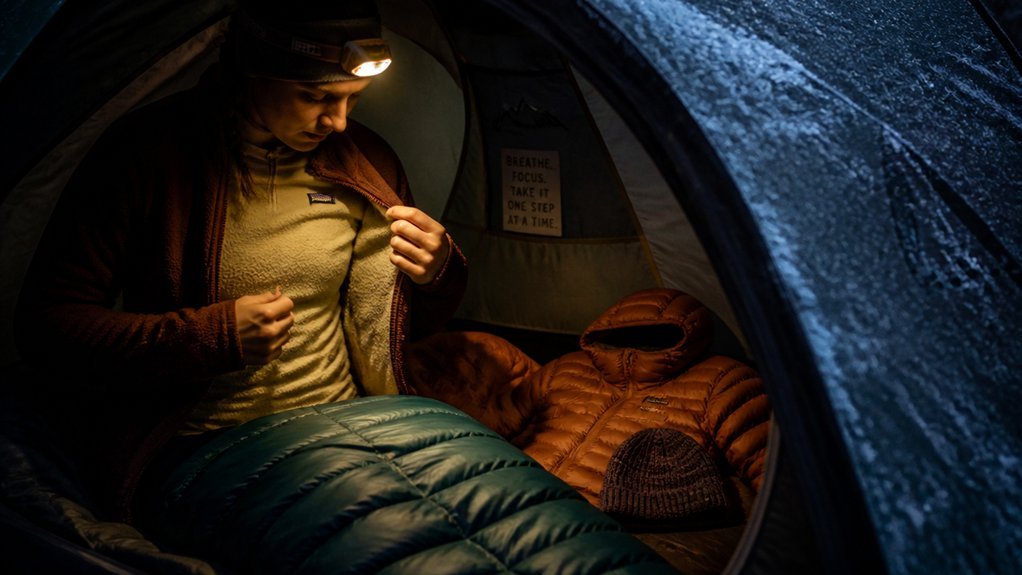
Once you’ve got your sleep system dialed in, your clothing choices become the next layer of defense against the cold. You extend your warmth system by wearing tomorrow’s clothes to bed, specifically your base layers. This strategy boosts camping insulation without adding bulk.
Here’s how to execute it:
- Select Merino wool base layers for superior moisture-wicking and overnight comfort
- Verify you’re wearing completely dry garments against your skin
- Keep additional next-day clothes inside your sleeping bag, not outside where dampness strikes
- Apply layering principles with planned-night garments to balance heat retention
This approach eliminates morning cold shock. Your body heat pre-warms the fabric. You wake, dress quickly, and maintain core temperature. Smart layering inside your bag beats shivering through frozen fabric at dawn.
Recommended Products
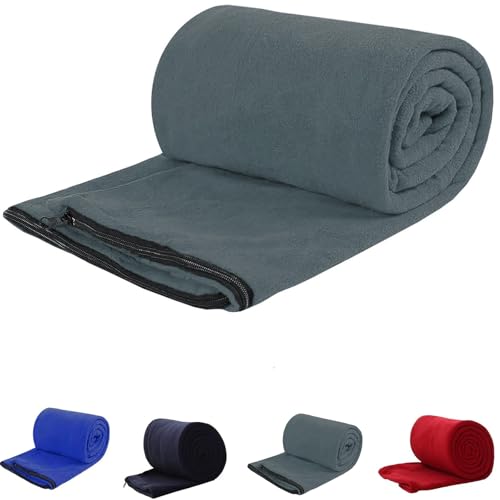
Ultralight and Compact:The fleece sleeping bag liner packs down into a 6 inch carry bag and only weighs 1 pound, Unfold size: 71 in (L) x 32 in(W),it's design for most people.Fold size: 9.5 x 5 x 5 in. Blanket rolls up into carrying bag for ease,and doubles in size when unzipped,

The Comfort Blend Sleeping Bag Liner provides comfort and improved hygiene while travelling or camping

Quality constructed of brushed 100% polyester fleece
Add Pre-Bed Warming Tactics for Cold Nights
Why crawl into a cold bag when you can preheat your sleep space? Master pre-bed warming by sliding a hot water bottle inside your sleeping bag twenty minutes before you turn in. This pre-warm sleeping bag strategy delivers immediate core relief.
Boil water for cocoa, then reuse that heat. Fill an uninsulated bottle; bare plastic releases warmth faster than wrapped vessels. You’ll get hours of inside sleeping bag warmth without carrying extra fuel.
A rechargeable hand warmer offers adjustable heat and lasts all night. Tuck warmers near feet, your extremities’ worst enemy, and avoid electronics against skin unless rated for direct contact.
Build redundancy warming options. Pack both methods so failure leaves you protected. Add sleeping bag liners for extra layering and improved heat retention. Your future self thanks you.
Recommended Products

Performance Weight: Merino base layer women is made from versatile 200g/m² merino wool, which offers the perfect balance of lightweight breathability and midweight warmth for all-season comfort during travel, hiking, skiing and everyday wear. The package includes women thermal leggings, merino wool shirt women + neck gaiter. Makes a great gift!

Midweight: Womens Merino Base Layer Set Available in: Lightweight = 165 g/m², Midweight = 250 g/m², Heavyweight = 320 g/m². Merino Wool Hiking Socks ($21 Value): Package includes Midweight Merino wool base layer top, Merino Leggings 250 g/m² + Merino Wool Hiking Socks. Cool Packaging. Makes A Great Gift!

Performance Weight: Merino wool base layer men is made from versatile 200g/m² merino wool, which offers the perfect balance of lightweight breathability and midweight warmth for all-season comfort during travel, hiking, skiing, and everyday wear. The package includes a merino wool shirt, merino wool long johns for men thermal + neck gaiter. Makes a great gift!
Vent Your Tent to Keep Condensation From Ruining Warmth
You might think sealing your tent tight keeps warmth in, but you’re actually trapping the enemy inside. Condensation from your breath and body heat builds up fast, soaking your gear and stealing tent warmth.
Here’s your moisture management playbook:
- Crack high vents or roof vents to let moist air escape upward without blasting you with cold drafts.
- Keep the door ajar, just a few inches, to maintain steady airflow through the tent.
- Tight-pitch your shelter so condensation concentrates on the walls, not your sleeping bag.
- Adjust your venting strategy for snow conditions; ventilation still matters when it’s freezing.
I’ve learned this the hard way. One trip, I woke up in a soggy bag because I kept the door open too wide. Now I balance venting with warmth. You’ll get the hang of it too.
Recommended Products

This waterproof outdoor mat has double sided aluminium foil and inside is made of EPE.

COMFORTABLE DESIGN: Foam and 75D polyester for soft outer layer
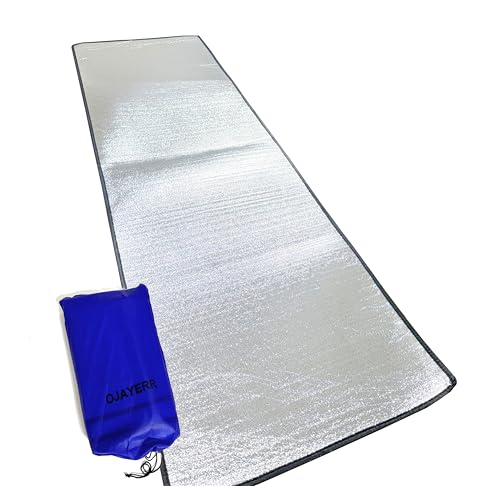
This waterproof outdoor mat has double sided aluminium foil and inside is made of EPE.